

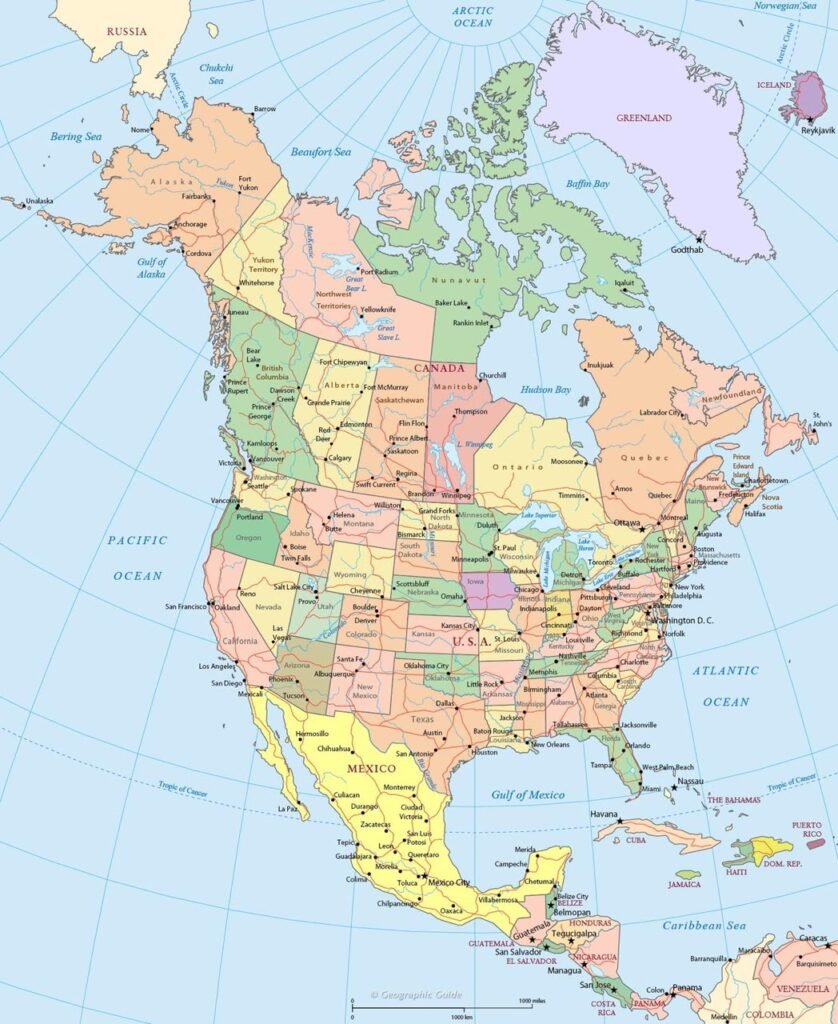
INTRODUCTION
This essay begins with excerpts from the speech delivered before the United States Congress on the 2nd of December 1823 by James Munroe, 5th President of the United States of America;
“The American continent by the free and independent condition which they have assumed and maintained are henceforth not to be considered as subjects for future colonization by any European powers…In the wars of the European power and matters relating to themselves we have never taken any part nor does it comport with our policy to do so…We owe it therefore to Candor and to the amicable relations existing between the United States and those powers declare that we should consider any attempt on their part to extend their system to any portion of this hemisphere as dangerous to our peace and safety…”[1]
In a sweeping declaration which would later form the crux of US foreign policy in the Western Hemisphere, President Munroe set out the terms within which the US will corporate with its neighbors in the Americas. This essay shall examine this doctrine, its application and transformation from a non-interventionist policy to an interventionist policy and analyze its resurgence under the 47th President of the United States of America, Donald J. Trump.
Secretary of State, John Quincy Adams
The Munroe Doctrine, although attributed to President Munroe, was brokered by the Secretary of State, John Quincy Adams.[2] John Adams was a seasoned diplomat. He had previously served as US minister to Russia, Britain and Prussia.[3] This period of service deepened his understanding of US diplomacy and the balance of power.
When it was suggested by British Foreign Minister George Canning that the US and Britain make a joint declaration to deter the powers of Europe from intervening in Latin America, Adams vehemently opposed. Adams was of the view that a joint declaration would make the US appear as a “subordinate cockboat in the wake of the British man of war”.[4] He believed that the British must have had imperial intentions to colonize Latin America. His argument was based on the fact that Britain was not committed to recognizing Latin American republics.[5] Adams also foresaw that a joint declaration could limit US expansion in the future. Consequently, he advised President Munroe to make a unitary declaration. This declaration would be necessary for the US to assert its independence and dominance within the American continent and open the door for future US expansion in the region.
The declaration was eventually made by President Munroe before Congress in 1823.[6] It sent a clear message: the US would not tolerate colonization or puppet monarchies within the western hemisphere.[7] By doing this, Munroe cautioned the Europeans powers against meddling in the affairs of the Americas and declared unwavering support for the newly independent nations of Latin American.
Evolution of the Doctrine
Throughout its application, the Munroe Doctrine has evolved in three main phases. Initially, the doctrine was a defensive posture intended to protect newly independent Latin American nations from European recolonization. It established the Two Spheres Principle, asserting that the Americas and Europe should remain distinct. During this era, the United States lacked the military power to enforce the doctrine on its own and relied on the British Royal Navy to deter other European powers.[8]
As the US grew powerful, the doctrine entered its interventionist phase. The US actively applied the doctrine to justify military operations in the western hemisphere. The US dominance in the western hemisphere, interfering in the internal affairs of states in its neighborhood.[9]
Following decades of resentment in Latin America, the U.S. attempted to soften the doctrine’s application. The Clark Memorandum (1928) argued that the Roosevelt Corollary was not a legitimate part of the original 1823 doctrine.[10] This paved the way for the Good Neighbor Policy under Franklin D. Roosevelt, which emphasized non-intervention and the creation of multilateral organizations like the Organization of American States.[11]
However, during the cold war, the doctrine was revived as a tool for anti-communist containment. It was invoked to justify the removal of leftist regimes and to block Soviet influence, most notably during the 1954 Guatemalan coup, the 1961 Bay of Pigs invasion, and the 1962 Cuban Missile Crisis.
After the collapse of the Soviet Union, the doctrine felt into relative disuse. In 2013, Secretary of State John Kelly declared that the era of the Munroe doctrine was over.[12]
Under the current administration, the doctrine has been explicitly reinstated as the Donroe Doctrine. This modern application is characterized by the direct use of military force in Venezuela, re-orienting supply chains to exclude Chinese and Russian influence in the Western Hemisphere, and the invocation of the doctrine to justify the pursuit of Greenland as an essential component of the Western Hemisphere’s security and mineral infrastructure.
The Pursuit of Greenland
The US has sought to extend the application of the Doctrine to Greenland. Primarily, Greenland has been designated as an essential component of the Western Hemisphere’s security architecture and thus for the building of the Golden Dome. The Make Greenland Great Again Act of 2025,[13] which is yet to be passed by Congress, advocates for the U.S. to seek the island’s acquisition through purchase or, if necessary, more coercive means. This mirrors the events of 1940, when the U.S. declared Greenland a protectorate to prevent its fall to Nazi Germany.[14] However, the modern context is defined by the race for critical minerals and the control of the GIUK gap.
Greenland’s significance in this new paradigm is twofold. First, it holds approximately 36 million tonnes of rare earth element (REE) reserves, making it one of the most significant undeveloped mineral frontiers in the world.[15] Second, its geographic position allows the U.S. to project power across the North Atlantic and secure the infrastructure foundations of the AI competition.
On the 22nd of September 2026, the US and Greenland revised the agreement in relation to the protection of Greenland.[16] The new agreement differs from the old in the following respect;
- The US is allowed to establish new defense areas at Narsarsuaq and Mestersvig.
- Non-NATO states like Russia and China are explicitly blocked from establishing manned and unmanned military installations, military presence, or control stakes in critical infrastructure and resource extraction in the region.
- The new deal has no expiry date and can be amended by mutual consent. More so, the agreement shall survive even if Greenland transitions from Danish rule to full independence, provided the island remains a NATO state.
- The new agreement recognizes the government of Greenland and incorporates it as a direct, co-equal signatory with Washington and Copenhagen.
Impact of the Donroe Doctrine on EU-US Relationship
The application of the Monroe Doctrine to Greenland has fundamentally altered the political and economic relationship between the U.S. and the European Union. The prospect of annexation of Greenland has led to an unprecedented shift in perception. In late 2025, the Danish Defence Intelligence Service designated the United States as a potential security risk for the first time.[17] European leaders have also refused to assist the U.S in its war with Iran, with NATO providing the U.S no assistance.
However, the EU and US share a longstanding trade relationship. In August 2025, the two powers signed the Framework on Reciprocal, Fair, and Balanced Trade to avoid a full-scale trade war.[18] Under the framework, the EU has agreed to eliminate tariffs on U.S. industrial goods and provide preferential access for American agricultural products.[19]
In exchange, the U.S. has applied a 15% tariff ceiling on most EU products, a measure that prevents even higher tariffs. This dependency is most pronounced in the energy and technology sectors where the EU has committed to massive procurement of American resources to settle trade imbalances. In the energy sector, the EU commits $750 Billion Liquified Natural Gas, Oil, Nuclear Energy to the U.S to reduce EU energy autonomy, $40 Billion for the production of AI chips, $600 Billion in strategic US sectors, and a mandatory spending of 5% of GDP to NATO agreed at the 2025 NATO Summit in the Hague.[20]
Effects of the Application of the Doctrine on the US
From a national security perspective, the doctrine has allowed the United States to restore American pre-eminence in its near abroad, systematically reducing the influence of rivals like China and Russia in the Western Hemisphere.[21] Also, the re-routing of supply chains and the securing of Venezuelan oil and Greenlandic minerals provide a buffer against global instability and ensure long-term access to the materials necessary for the fourth industrial revolution.[22] The transactional approach to alliances has also successfully reduced the fiscal burden of global leadership on the US as the 2025 trade framework forces allies to contribute more significantly to the U.S. economy and defense industrial base.[23]
However, the unilateral nature of the doctrine has generated significant diplomatic friction. The EU’s refusal to assist the US in Iran may be attributed to the application of the doctrine to Greenland.[24] Also, the intervention in Venezuela and the threat to acquire Greenland suggest a fragmented legality where regional orders override global norms.[25]
Effects of the Application of the Doctrine on the EU
The restoration of the Munroe doctrine has led to European unity and strategic autonomy. The doctrine has allowed the EU to accelerate its efforts in building an independent European defense union, enhancing its security capacity. In addition, this has also led to the proposal for the EU’s own sphere of influence. This will significantly reduce its strategic dependency on the US. In the long run, this will create a self-reliant EU that would be able to handle regional threats autonomously whiles maintaining a more balanced relationship with the US.
However, the doctrine’s resurgence negatively impacts the EU. The 2025 Trade Framework forces the EU to accept trade imbalances and divert billions of euros toward American energy and technology products. The pressure on Greenland has strained the internal cohesion of NATO and the EU, creating divisions between those who favor a coordinated response and those who fear U.S. retaliation. Moreover, the EU becomes more vulnerable to Russian aggression and Chinese economic encroachment if the US continues to focus on regional hegemony rather than strengthening their alliance. This would be a significant test in assessing the EU’s ability to defend its territory without relying on American leadership, a challenge for which its current military and industrial posture may not be prepared for.
CONCLUSION
In conclusion, the Munroe doctrine has evolved from a speech delivered in 1823 into a foreign policy cornerstone which now dictates US relations with its closest allies. Its application revives a broader reckoning with the tension between regional hegemony and the rules-based international order. Although, the impact of the doctrine on the global stage is yet to be seen, it is evident that the doctrine has significantly altered the architecture of international relations and thus, demands careful and continuous scrutiny by policymakers, scholars and international institutions alike.
[1] James Monroe, “Seventh Annual Message to Congress” (2 December 1823) in James D Richardson (ed), A Compilation of the Messages and Papers of the Presidents 1789–1897 (Government Printing Office 1897) vol 2, 209.
[2] Samuel Flagg Bemis, John Quincy Adams and the Foundations of American Foreign Policy (Alfred A Knopf 1949) 181–185
[3] ibid 372–382.
[4] John Quincy Adams, Memoirs of John Quincy Adams (JB Lippincott 1875) vol 6, 179 (diary entry of 16 November 1823).
[5] ‘Milestones: 1801–1829: Monroe Doctrine, 1823’, Office of the Historian, Foreign Service Institute, United States Department of State https://history.state.gov/milestones/1801-1829/monroe accessed 14 April 2026.
[6] Dexter Perkins, The Monroe Doctrine 1823–1826 (Harvard University Press 1927) 62–68.
[7] Monroe (n 1) 209.
[8] Why the Monroe Doctrine Was Enforced by the Royal Navy’ (TheCollector, 6 April 2026) <https://www.thecollector.com/monroe-doctrine-british-navy/>accessed 14 April 2026.
[9] Empire on the Pacific: A Study in American Continental Expansion (n 20).
[10] Ibid Memorandum on the Monroe Doctrine (n 25).
[11] Ibid.
[12] R Evan Ellis, ‘The Monroe Doctrine, Then and Now’ (Strategic Studies Institute, 5 December 2023) <https://ssi.armywarcollege.edu/SSI-Media/Recent-Publications/Article/3611560/the-monroe-doctrine-then-and-now/> accessed 14 April 2026.
[13] Make Greenland Great Again Act, HR 361, 119th Cong (2025).
[14] Agreement Relating to the Defence of Greenland (n 27).
[15] Greenland Minerals A/S, Mineral Resources in Greenland: Status and Outlook (Ministry of Mineral Resources, Greenland 2022) 14–18.
[16] Agreement Between the Government of the United States of America and the Government of the Kingdom of Denmark together with the Government of Greenland to Amend and Supplement the Agreement of 27 April 1951 (signed 18 September 2026)<https://www.whitehouse.gov/…>
[17] Danish Defence Intelligence Service (DDIS), Intelligence Risk Assessment 2025 (DDIS 2025) 8.
[18] Framework on Reciprocal, Fair, and Balanced Trade (EU–US) (August 2025).
[19] Ibid art 3.
[20] ibid art 5; see also Communiqué of the 2025 NATO Summit (The Hague, June 2025) para 14 (member states committing to 5% GDP defence spending).
[21] NSS 2025 (n 36) 24–26
[22] Michael Smith, ‘Worth Its Weight in Lithium? The Dynamics of Sustainability, Rare Earth Minerals and NATO’ (2026) Preprints <https://doi.org/10.20944/preprints202601.1523.v1> accessed 14 April 2026
[23] Petros C Mavroidis, ‘Tariffs, Deals and Multilateral Ideals: Can the World Trade Organization Survive?’ (2025) Bruegel Working Paper 25/2025 <https://doi.org/10.64153/PJGJ3533> accessed 14 April 2026.
[24] Miguel Ángel Roca Durán, ‘The Greenland Effect’ (Foreign Policy in Focus, 23 March 2026) https://fpif.org/the-greenland-effect/ accessed 14 April 2026
[25] ‘From Venezuela to Greenland: Why Europe must respond to US actions’ (European Policy Centre, 7 January 2026) https://www.epc.eu/publication/why-europe-must-respond-to-us-actions-in-venezuela-greenland/ accessed 14 April 2026