
Contents
HARD POWER IN THE 21ST CENTURY: THE ‘DONROE’ DOCTRINE. 1
Secretary of State, John Quincy Adams. 4
Immediate effect and application of the Munroe doctrine upon declaration. 6
Manifest Destiny and International Police Power. 7
The Donroe Doctrine and the US National Security Strategy. 14
Operation Absolute Resolve. 15
Impact of the Donroe Doctrine on EU-US Relationship. 18
Effects of the Application of the Doctrine on the US. 19
Effects of the Application of the Doctrine on the EU. 20
INTRODUCTION
This essay begins with excerpts from the speech delivered before the United States Congress on the 2nd of December 1823 by James Munroe, 5th President of the United States of America;
“The American continent by the free and independent condition which they have assumed and maintained are henceforth not to be considered as subjects for future colonization by any European powers…In the wars of the European power and matters relating to themselves we have never taken any part nor does it comport with our policy to do so…We owe it therefore to Candor and to the amicable relations existing between the United States and those powers declare that we should consider any attempt on their part to extend their system to any portion of this hemisphere as dangerous to our peace and safety…”[1]
In a sweeping declaration which would later form the crux of US foreign policy in the Western Hemisphere President Munroe set out the terms within which the US will corporate with its neighbours in the Americas. This essay shall examine this doctrine, its application and transformation from a non-interventionist policy to an interventionist policy and analyze its resurgence under the 47th President of the United States of America, Donald J. Trump.
Historical Antecedence.
The volatile state of Europe after the end of the Napoleonic Wars coincided with the fight for independence by Latin America from Spanish rule. Britain, France, Prussia, Russia and Austria, the strong European Monarchies, were seeking to restore their monarchical power in Europe and the world by repressing revolutionary ideas.[2] In Latin America, countries like Chile, Venezuela, Bolivia, Columbia, Ecuador, Panama, Peru, and Argentina, were in open rebellion against the imperial power of the Spanish Monarch.[3] In a stunning fight for independence, revolutionaries like Simon Bolivar and Hose De San Martin defeated the Spanish Empire in the Spanish American wars for independence, which span from 1808 to 1833.
Russia, Prussia, Austria, and France, who later joined to support in the 1820s, formed the Holy Alliance in 1815.[4] During this period, the Russian Empire vastly expanded, extending its territory towards the pacific northwest in 1821.[5] The goal of the holy alliance was to preserve the divine right monarchy and prevent revolutionary ideas of republican democracy. It was believed that Spain supported the holy alliance and sought to retake their former Latin American colonies.
Having survived the War of 1812 against Britain and Spain,[6] the United States considered the possibility of a re-colonization of the Americas an existential threat to its own security and independence. Consequently, the US, a relatively young nation, sought to protect itself and its neighbours from foreign aggression.
Secretary of State, John Quincy Adams.
Although the Munroe Doctrine is attributed to President Munroe, it was brokered by the Secretary of State, John Quincy Adams.[7] John Adams was a seasoned diplomat. He had previously served as US minister to Russia, Britain and Prussia.[8] This period of service deepened his understanding of US diplomacy and the balance of power.
Thus, when it was suggested by British Foreign Minister George Canning that the US and Britain make a joint declaration to deter the powers of Europe from intervening in Latin America, Adams vehemently opposed. Adams was of the view that a joint declaration would make the US appear a “subordinate cockboat in the wake of the British man of war”.[9] He believed that the British had imperial intentions to colonize Latin America. This believe was substantiated by the defeat of the US in the war of 1812 in which Britain burnt down the US capital, Washington D.C.[10]
His argument was based on the fact that Britain was not committed to recognizing Latin American republics.[11] Adams also foresaw that a joint declaration could limit US expansion in the future. Consequently, he advised President Munroe to make a unitary declaration. This declaration would be necessary for the US to assert its independence and dominance within the American continent, and open the door for future US expansion in the region.
The declaration was eventually made by President Munroe before Congress in 1823.[12] It sent a clear message: the US would not tolerate colonization or puppet monarchies within the western hemisphere.[13] By this single act, Munroe warned Europeans from meddling in the affairs of the Americas and declared unwavering support for the newly independent nations of Latin American.
Immediate effect and application of the Munroe doctrine upon declaration.
At the time the doctrine was declared, the US lacked the military power to enforce its foreign policy. Hence, the doctrine was generally perceived as a vision statement rather than an actionable policy.[14]
The doctrine was however received with great support within Latin American nations. This was obviously due to the fact that these Republics needed all the support they could get to ensure their sovereignty was not compromised. The nations of Latin America also believed that a combined protection from the US and Britain, who they perceived would come to the aid of US to protect them, was enough guarantee to prevent the holy alliance from rekindling imperialism in the region.
In Europe, the doctrine was deemed inconsequential. The holy alliance, though condemning the doctrine, did not perceive the US as a threat. The US was not a powerful state. It did not have the military power to back its declaration. The rest of Europe ignored the declaration with Britain annexing the Falkland Islands in 1833.[15] The US, could not oppose this annexation. The doctrine only became action after it was reinvented through the lens of manifest destiny.
Manifest Destiny and International Police Power.
In the mid-19th Century, the doctrine was reinterpreted through the lens of manifest destiny.[16] President James K. Polk was the first to apply the Munroe doctrine to advance the US territorial advancement in Oregon, Texas and California.[17] This was the first deviation of the doctrine from a defensive justification rule to a proactive military policy.
Polk, then candidate at the Democratic Party convention argued for the annexation of Texas, contrary to Martin Van Buren’s cautious, anti-expansionist stance. Polk also argued that the US should end the joint administration of Oregon with Great Britain and advance to control the territory to the pacific.[18] With California, Polk invoked the doctrine to protect Mexican territories from European influence. His primary goal was to prevent Britain and France from interfering in California.[19] In effect, Polk’s rendition of the doctrine was that Europe should not interfere in the US’ projected territorial expansion.[20]
In 1895, US Secretary of State Richard Olney declared the US sovereign in the Western hemisphere.[21] This is known as the Olney Corollary. The effect of this declaration was that the US could mediate any disputes between Latin American Nations and European Powers. This would be later expanded by Roosevelt in 1904.
The 20th Century ushered in the era of US International Policing led by Roosevelt’s Corollary. Roosevelt applied the Munroe Doctrine, declaring that the US would exercise international police powers in all matters of ‘flagrant and chronic wrongdoing’ in Latin American countries.[22] This was used to justify military interventions in Cuba, Nicaragua, Haiti and Dominican Republic.[23]
The Lodge Corollary of 1912 was the first time the doctrine was used against a non-European power. Senator Henry Cabot Lodge warned Japan from acquiring territories in the Americas such as Magdalena Bay in Mexico that could threaten American communications and safety.[24] In 1928, Undersecretary of state Reuben Clark reinterpreted the Munroe doctrine to exclude the Roosevelt Corollary.[25] The effect of this stance was that U.S interventionism was no longer considered a tenet of the Munroe Doctrine. The Clark memorandum was officially published in 1930, aimed at repairing relations with Latin American countries and reduce hostility towards the U.S in the region.[26] This position was however short lived.
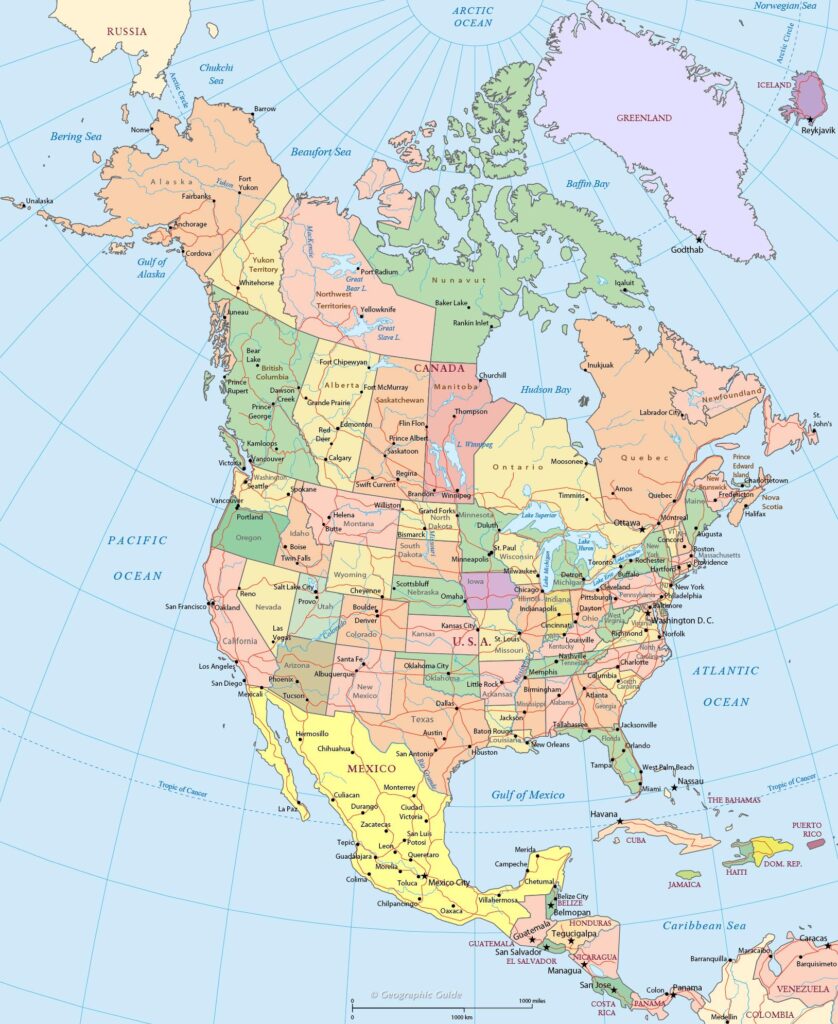
In 1940, Nazi Germany occupied Denmark. To prevent a subsequent occupation of Greenland and protect its interest, the Munroe doctrine was invoked to declare Greenland a protectorate of the U.S through the defense agreement signed between the U.S government and the Danish ambassador to U.S, Henrik Kauffmann.[27] The agreement ensured that Greenland, strategic for its location which is significant for Atlantic weather forecasting and monitoring German U-boat activity, did not fall into the hands of the Nazis. The agreement also ensured the protection of U.S cryolite mine in Ivigtut (now Ivittuut) and the larger protection of the western hemisphere.[28]
During the cold war, the doctrine was used to justify the fight against communist influence within the region. Notably, the U.S supported the overthrow of President Jacob Arbenz in Guatemala in 1954.[29] In 1961, the doctrine was invoked in an attempt to remove Fidel Castro in Cuba. The Bay of Pigs invasion was launched at Playa Giron and Playa Larga with Cuban exiles trained in Guatemala and Nicaragua.[30]
For thirteen days in October 1962, the U.S and the USSR were at the brink of war in what has become known as the Cuban missile crisis. The impasse started when a US pilot on the American U-2 spy plane photographed a Soviet SS-4 medium-range ballistic missile being assembled for installation.[31] President John F. Kennedy invoked the Munroe doctrine to demand the removal of the Soviet missile from Cuba, which is only 90 miles south of Key West, Florida.[32] The crisis was resolved when the US agreed not to invade Cuba and a further proposal by the USSR to dismantle the missiles if the US would remove their missile installation in Turkey.[33]
In 1983, the doctrine was applied for the invasion of Grenada for the removal of the Marxist regime.[34] It was also later applied in 1989 in Panama for the arrest of Manuel Noriega on drug trafficking charges.[35]
In these instances, the US applied its foreign policy on other sovereign nations, overriding international law treaties and norms. The primary test to invoke this principle was to determine whether the regional security and economic interest of the US was at stake at any period. In fringe circumstances, the doctrine is applied to defend the US political interest, that is, eliminating communist, socialist and Marxist expansion within the western hemisphere.
Evolution of the Doctrine.
Throughout its existence, the Munroe Doctrine has evolved in three main phases. Initially, the doctrine was a defensive posture intended to protect newly independent Latin American nations from European recolonization. It established the Two Spheres Principle, asserting that the Americas and Europe should remain distinct. During this era, the United States lacked the military power to enforce the doctrine on its own and relied on the British Royal Navy to deter other European powers.[36]
As the US grew powerful, the doctrine entered its interventionist phase. The US actively applied the doctrine to justify military operations in the western hemisphere. The US dominance in the western hemisphere, interfering in the internal affairs of states in its neighborhood.[37]
Following decades of resentment in Latin America, the U.S. attempted to soften the doctrine’s application. The Clark Memorandum (1928) argued that the Roosevelt Corollary was not a legitimate part of the original 1823 doctrine.[38] This paved the way for the Good Neighbor Policy under Franklin D. Roosevelt, which emphasized non-intervention and the creation of multilateral organizations like the Organization of American States.[39]
However, during the cold war, the doctrine was revived as a tool for anti-communist containment. It was invoked to justify the removal of leftist regimes and to block Soviet influence, most notably during the 1954 Guatemalan coup, the 1961 Bay of Pigs invasion, and the 1962 Cuban Missile Crisis.
After the collapse of the Soviet Union, the doctrine felt into relative disuse. In 2013, Secretary of State John Kelly declared that the era of the Munroe doctrine was over.[40]
Under the current administration, the doctrine has been explicitly reinstated as the Donroe Doctrine. This modern application is characterized by the direct use of military force in Venezuela, re-orienting supply chains to exclude Chinese and Russian influence in the Western Hemisphere, and the invocation of the doctrine to justify the pursuit of Greenland as an essential component of the Western Hemisphere’s security and mineral infrastructure.
The Donroe Doctrine and the US National Security Strategy.
President Donald J. Trump has pursued an active application of the Munroe doctrine since 2025. This is because the doctrine has been formalized in the 2025 US National Security Strategy.[41] The National Security Strategy for 2025 reverses the Kerry declaration. The document postulates a Trump Corollary to the Munroe Doctrine, establishing American dominance in the Western Hemisphere and sets goals to ensure that the region remains free of hostile foreign incursion or ownership of key assets.
This is what is termed as the Donroe Doctrine. The Donroe Doctrine differs from its predecessors by its intense focus on economic security and reshaping supply chains. The Doctrine views the hemisphere as an exclusive sphere of influence where foreign adversaries, primarily China and Russia, must be excluded from exercising control. This has been the rational behind the recent application of the doctrine in the Western Hemisphere. The doctrine has so far been invoked in Venezuela and Greenland.
Operation Absolute Resolve.
Before the capture of President Maduro in January 2026, the US applied economic sanctions to Venezuela.[42] In 2018, Maduro was reelected to a second term despite boycotts and accusations of fraud. The Venezuela national assembly declared the election as illegal, two weeks after Maduro had been sworn in.[43] The opposition leader, Juan Guaido, announced that he would assume office as interim president until free and fair elections were held. Gualdo was recognized by the US, EU and Canada as the leader of Venezuela.[44] However, countries such as China, Russia, Cuba and Turkey retained their support for Maduro.
This political standoff saw an increase in US sanctions against Maduro’s government and an increasing reliance of the Maduro government on Russia, China and Cuba. Maduro relied on Cuban intelligence to stay in power, Russian trade in oil to evade US sanctions and China’s assistance and promise to rebuild the country’s national power grid. Amidst the chaos, an estimate eight million Venezuelans fled the nation.
Upon assumption to office for a second term, President Donald Trump revived maximum pressure campaign against Venezuela, accusing the country of trafficking large quantities of cocaine into the US.[45] This came off from allegations made in his first term, where President Trump accused Maduro of leading the ‘Cartel de los Soles’, a criminal network in Venezuela that traffics drugs to the US.
In January 2026, the Trump administration moved beyond economic sanctions to direct military action through Operation Absolute Resolve. This intervention, which led to the capture of President Nicolás Maduro and his wife, Cilia Flores, was justified under the Monroe Doctrine.[46]
The immediate aftermath of the operation saw the United States asserting control over Venezuela’s internal affairs, with the goal of running the country until an orderly political transition occurs. Crucially, the administration made it clear that access to Venezuelan oil, the world’s largest proven reserves, was a central motive for the action. Within weeks, the U.S. announced a 50-million-barrel oil supply deal with a transitional authority, signaling a return of American oil and gas companies to the country’s infrastructure.
The Pursuit of Greenland.
The US has sought to extend the application of the Doctrine to Greenland. Primarily, Greenland has been designated as an essential component of the Western Hemisphere’s security architecture and thus for the building of the Golden Dome. The Make Greenland Great Again Act of 2025,[47] which is yet to be passed by Congress, advocates for the U.S. to seek the island’s acquisition through purchase or, if necessary, more coercive means. This mirrors the events of 1940, when the U.S. declared Greenland a protectorate to prevent its fall to Nazi Germany.[48] However, the modern context is defined by the race for critical minerals and the control of the GIUK gap.
Greenland’s significance in this new paradigm is twofold. First, it holds approximately 36 million tonnes of rare earth element (REE) reserves, making it one of the most significant undeveloped mineral frontiers in the world.[49] Second, its geographic position allows the U.S. to project power across the North Atlantic and secure the infrastructure foundations of the AI competition.
Impact of the Donroe Doctrine on EU-US Relationship.
The application of the Monroe Doctrine to Greenland has fundamentally altered the political and economic relationship between the U.S. and the European Union. The prospect of annexation of Greenland has led to an unprecedented shift in perception. In late 2025, the Danish Defence Intelligence Service designated the United States as a potential security risk for the first time.[50] European leaders have also refused to assist the U.S in its Operation Epic Fury in Iran, with NATO providing the U.S no assistance.
However, the EU and US share a longstanding trade relationship. In August 2025, the two powers signed the Framework on Reciprocal, Fair, and Balanced Trade to avoid a full-scale trade war.[51] Under the framework, the EU has agreed to eliminate tariffs on U.S. industrial goods and provide preferential access for American agricultural products.[52]
In exchange, the U.S. has applied a15% tariff ceiling on most EU products, a measure that prevents even higher tariffs. This dependency is most pronounced in the energy and technology sectors where the EU has committed to massive procurement of American resources to settle trade imbalances. In the energy sector, the EU commits $750 Billion Liquified Natural Gas, Oil, Nuclear Energy to the U.S to reduce EU energy autonomy, $40 Billion for the production of AI chips, $600 Billion in strategic US sectors, and a mandatory spending of 5% of GDP to NATO agreed at the 2025 NATO Summit in the Hague.[53]
Effects of the Application of the Doctrine on the US.
From a national security perspective, the doctrine has allowed the United States to restore American pre-eminence in its near abroad, systematically reducing the influence of rivals like China and Russia in the Western Hemisphere.[54] Also, the re-routing of supply chains and the securing of Venezuelan oil and Greenlandic minerals provide a buffer against global instability and ensure long-term access to the materials necessary for the fourth industrial revolution.[55] The transactional approach to alliances has also successfully reduced the fiscal burden of global leadership on the US as the 2025 trade framework forces allies to contribute more significantly to the U.S. economy and defense industrial base.[56]
However, the unilateral nature of the doctrine has generated significant diplomatic friction. The EU’s refusal to assist the US in Iran may be attributed to the application of the doctrine to Greenland.[57] Also, the intervention in Venezuela and the threat to acquire Greenland suggest a fragmented legality where regional orders override global norms.[58]
Effects of the Application of the Doctrine on the EU.
The restoration of the Munroe doctrine has led to European unity and strategic autonomy. The doctrine has allowed the EU to accelerate its efforts in building an independent European defense union, enhancing its security capacity. In addition, this has also led to the proposal for the EU’s own sphere of influence. This will significantly reduce its strategic dependency on the US. In the long run, this will create a self-reliant EU that would be able to handle regional threats autonomously whiles maintaining a more balanced relationship with the US.
However, the doctrine’s resurgence negatively impacts the EU. The 2025 Trade Framework forces the EU to accept trade imbalances and divert billions of euros toward American energy and technology products. The pressure on Greenland has strained the internal cohesion of NATO and the EU, creating divisions between those who favor a coordinated response and those who fear U.S. retaliation. Moreover, the EU becomes more vulnerable to Russian aggression and Chinese economic encroachment if the US continues to focus on regional hegemony rather than strengthening their alliance. This would be a significant test in assessing the EU’s ability to defend its territory without relying on American leadership, a challenge for which its current military and industrial posture may not be prepared for.
CONCLUSION.
In conclusion, the Munroe doctrine has evolved from a speech delivered in 1823 into a foreign policy cornerstone which now dictates US relations with its closest ally. Its application revives a broader reckoning with the tension between regional hegemony and the rules-based international order. Although, the impact of the doctrine on the global stage is yet to be seen, it is evident that the doctrine has significantly altered the architecture of international relations and thus, demands careful and continuous scrutiny by policymakers, scholars and international institutions alike.
[1] James Monroe, “Seventh Annual Message to Congress” (2 December 1823) in James D Richardson (ed), A Compilation of the Messages and Papers of the Presidents 1789–1897 (Government Printing Office 1897) vol 2, 209.
[2] John Lynch, The Spanish American Revolutions 1808–1826 (2nd edn, WW Norton 1986) 1–30
[3] Timothy E Anna, The Fall of the Royal Government in Peru (University of Nebraska Press 1979) 12.
[4] Declaration of the Holy Alliance (26 September 1815) in Edward Hertslet (ed), The Map of Europe by Treaty (Butterworths 1875) vol 1, 317.
[5] Ukase of the Russian Emperor (4 September 1821), cited in Dexter Perkins, A History of the Monroe Doctrine (Little, Brown 1955) 25.
[6] Donald R Hickey, The War of 1812: A Forgotten Conflict (University of Illinois Press 1989) 303.
[7] Samuel Flagg Bemis, John Quincy Adams and the Foundations of American Foreign Policy (Alfred A Knopf 1949) 181–185
[8] ibid 372–382.
[9] John Quincy Adams, Memoirs of John Quincy Adams (JB Lippincott 1875) vol 6, 179 (diary entry of 16 November 1823).
[10] The Capture of Washington also referred to as the Burning of Washington occurred on the 24th of August 1814 following the defeat of American Forces at the Battle of Bladensburg.
[11] ‘Milestones: 1801–1829: Monroe Doctrine, 1823’, Office of the Historian, Foreign Service Institute, United States Department of State https://history.state.gov/milestones/1801-1829/monroe accessed 14 April 2026.
[12] Dexter Perkins, The Monroe Doctrine 1823–1826 (Harvard University Press 1927) 62–68.
[13] Monroe (n 1) 209.
[14] Perkins (n 11) 74–82.
[15] Ibid 89.
[16] Julius W Pratt, ‘The Origin of “Manifest Destiny”’ (1927) 32(6) American Historical Review 795.
[17] Frederick Merk, Manifest Destiny and Mission in American History (Harvard University Press 1963) 24–29.
[18] Charles Sellers, James K Polk: Continentalist 1843–1846 (Princeton University Press 1966) 213–219.
[19] ibid 222–230.
[20] Norman A Graebner, Empire on the Pacific: A Study in American Continental Expansion (Ronald Press 1955) 98–104.
[21][21] Richard Olney, “Secretary of State Olney to Ambassador Bayard” (20 July 1895) in Foreign Relations of the United States 1895 (Government Printing Office 1896) 545, 558 (“the United States is practically sovereign on this continent”)
[22] Theodore Roosevelt, “Fourth Annual Message to Congress” (6 December 1904) in Richardson (ed) (n 1) vol 14, 6923 (the Roosevelt Corollary).
[23] Lester D Langley, The Banana Wars: United States Intervention in the Caribbean, 1898–1934 (University Press of Kentucky 1985) 45–60.
[24] Congressional Record, 62nd Cong, 2nd Sess (2 August 1912) 10045 (Senator Henry Cabot Lodge).
[25] JR Clark, Memorandum on the Monroe Doctrine (Department of State Publication, Government Printing Office 1930)
[26] Ibid 1–4.
[27] Agreement Relating to the Defence of Greenland (US–Denmark) (9 April 1941) TIAS No 999; see also Henrik Kauffmann, “The Greenland Agreement” (1941) 35 American Journal of International Law 457
[28] Ibid; Nicholas John Spykman, America’s Strategy in World Politics (Harcourt, Brace 1942) 104.
[29] Stephen G Rabe, Eisenhower and Latin America: The Foreign Policy of Anticommunism (University of North Carolina Press 1988) 58–72.
[30] Peter Kornbluh, Bay of Pigs Declassified: The Secret CIA Report on the Invasion of Cuba (New Press 1998) 1–12.
[31] Graham T Allison, Essence of Decision: Explaining the Cuban Missile Crisis (Little, Brown 1971) 1–5.
[32] Presidential Proclamation 3504, “Interdiction of the Delivery of Offensive Weapons to Cuba” (23 October 1962) 27 FR 10401.
[33] Robert F Kennedy, Thirteen Days: A Memoir of the Cuban Missile Crisis (WW Norton 1969) 24–27.
[34] Executive Order 12433 and the Caribbean Basin Recovery Act 1983 (PL 98-67); see also Mark Adkin, Urgent Fury: The Battle for Grenada (Lexington Books 1989) 1–10.
[35] United States v Manuel Antonio Noriega 117 F 3d 1206 (11th Cir 1997); see also Frederick Kempe, Divorcing the Dictator: America’s Bungled Affair with Noriega (GP Putnam’s Sons 1990) 1–8.
[36] Why the Monroe Doctrine Was Enforced by the Royal Navy’ (TheCollector, 6 April 2026) <https://www.thecollector.com/monroe-doctrine-british-navy/>accessed 14 April 2026.
[37] Empire on the Pacific: A Study in American Continental Expansion (n 20).
[38] Ibid Memorandum on the Monroe Doctrine (n 25).
[39] Ibid.
[40] R Evan Ellis, ‘The Monroe Doctrine, Then and Now’ (Strategic Studies Institute, 5 December 2023) <https://ssi.armywarcollege.edu/SSI-Media/Recent-Publications/Article/3611560/the-monroe-doctrine-then-and-now/> accessed 14 April 2026.
[41] The White House, National Security Strategy of the United States of America (2025) 5.
[42] Executive Order on Imposing Sanctions with Respect to the Situation in Venezuela (5 March 2015) EO 13692
[43] [43]National Assembly of Venezuela, “Agreement Declaring the Illegitimacy of Nicolas Maduro” (9 January 2019); see also Human Rights Watch, Venezuela’s Humanitarian Emergency (Human Rights Watch 2019) 1–4
[44] Council Decision 2019/1163/CFSP [2019] OJ L183/1 (EU recognition of Juan Guaidó)
[45] Department of Justice, ‘Nicolás Maduro Moros and 14 Current and Former Venezuelan Officials Charged with Narco-Terrorism, Corruption, Drug Trafficking and Other Criminal Charges’ (26 March 2020) https://www.justice.gov/opa/pr/nicol-s-maduro-moros-and-14-current-and-former-venezuelan-officials-charged-narco-terrorism accessed 14 April 2026.
[46] NSS 2025 (n 36) 22.
[47] Make Greenland Great Again Act, HR 361, 119th Cong (2025).
[48] Agreement Relating to the Defence of Greenland (n 27).
[49] Greenland Minerals A/S, Mineral Resources in Greenland: Status and Outlook (Ministry of Mineral Resources, Greenland 2022) 14–18.
[50] Danish Defence Intelligence Service (DDIS), Intelligence Risk Assessment 2025 (DDIS 2025) 8.
[51] Framework on Reciprocal, Fair, and Balanced Trade (EU–US) (August 2025).
[52] Ibid art 3.
[53] ibid art 5; see also Communiqué of the 2025 NATO Summit (The Hague, June 2025) para 14 (member states committing to 5% GDP defence spending).
[54] NSS 2025 (n 36) 24–26
[55] Michael Smith, ‘Worth Its Weight in Lithium? The Dynamics of Sustainability, Rare Earth Minerals and NATO’ (2026) Preprints <https://doi.org/10.20944/preprints202601.1523.v1> accessed 14 April 2026.
[56] Petros C Mavroidis, ‘Tariffs, Deals and Multilateral Ideals: Can the World Trade Organization Survive?’ (2025) Bruegel Working Paper 25/2025 <https://doi.org/10.64153/PJGJ3533> accessed 14 April 2026.
[57] Miguel Ángel Roca Durán, ‘The Greenland Effect’ (Foreign Policy in Focus, 23 March 2026) https://fpif.org/the-greenland-effect/ accessed 14 April 2026.
[58] ‘From Venezuela to Greenland: Why Europe must respond to US actions’ (European Policy Centre, 7 January 2026) https://www.epc.eu/publication/why-europe-must-respond-to-us-actions-in-venezuela-greenland/ accessed 14 April 2026.